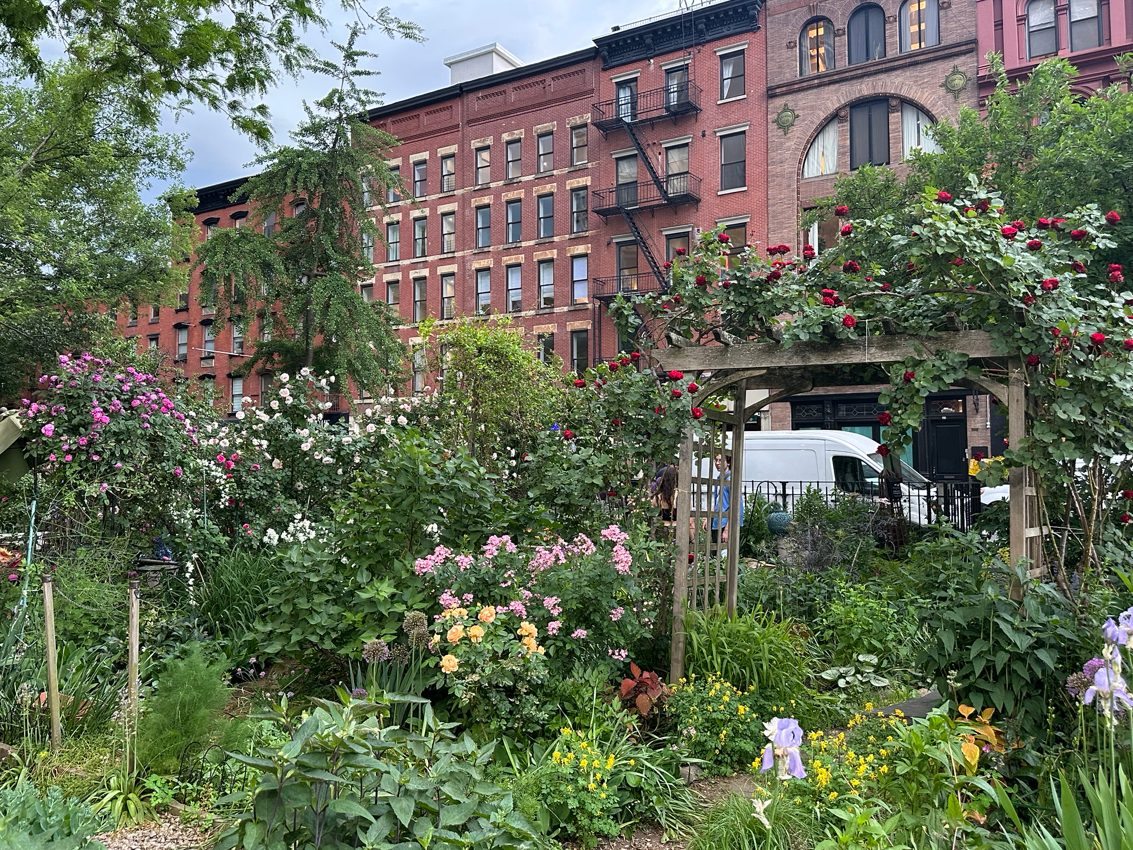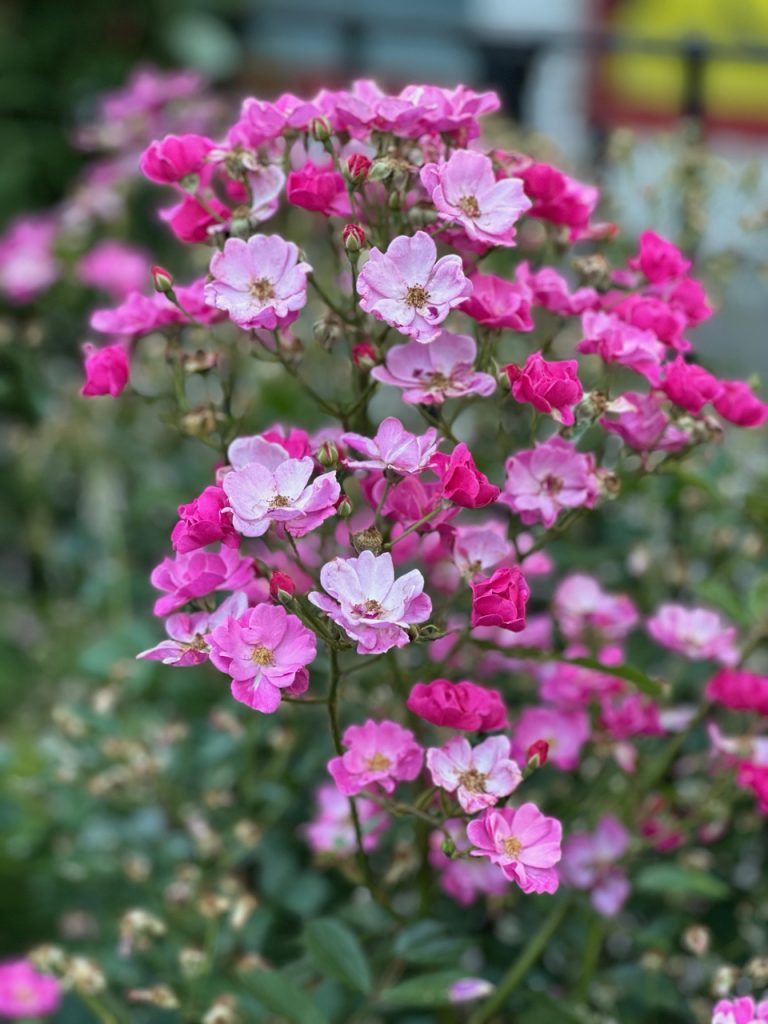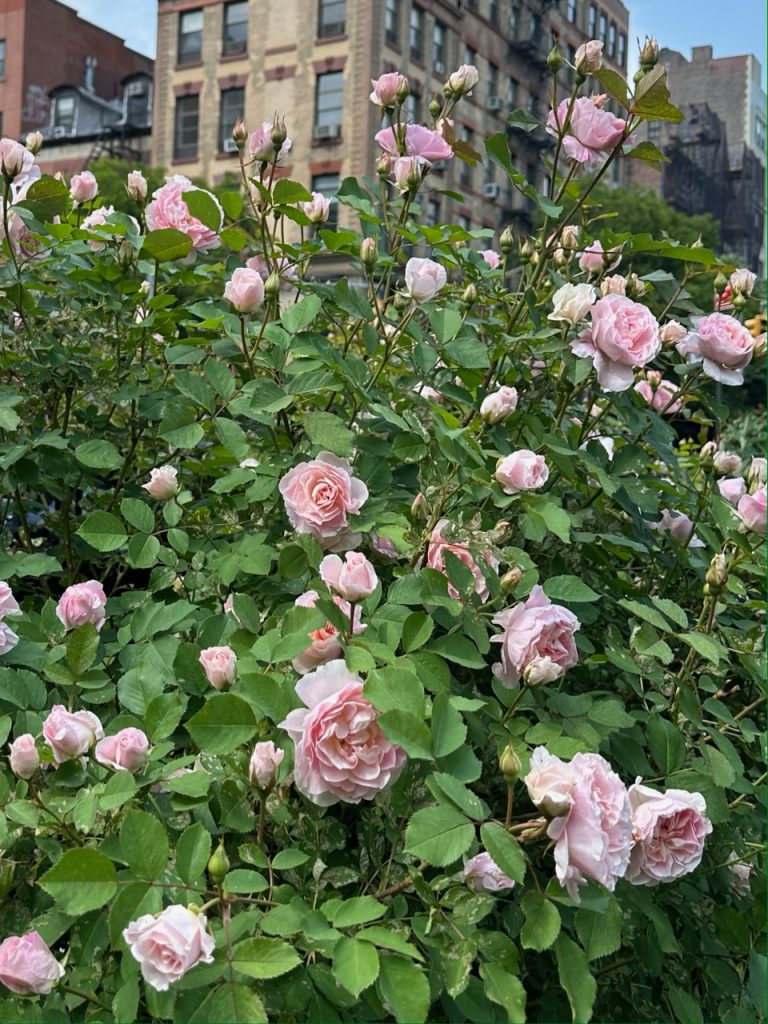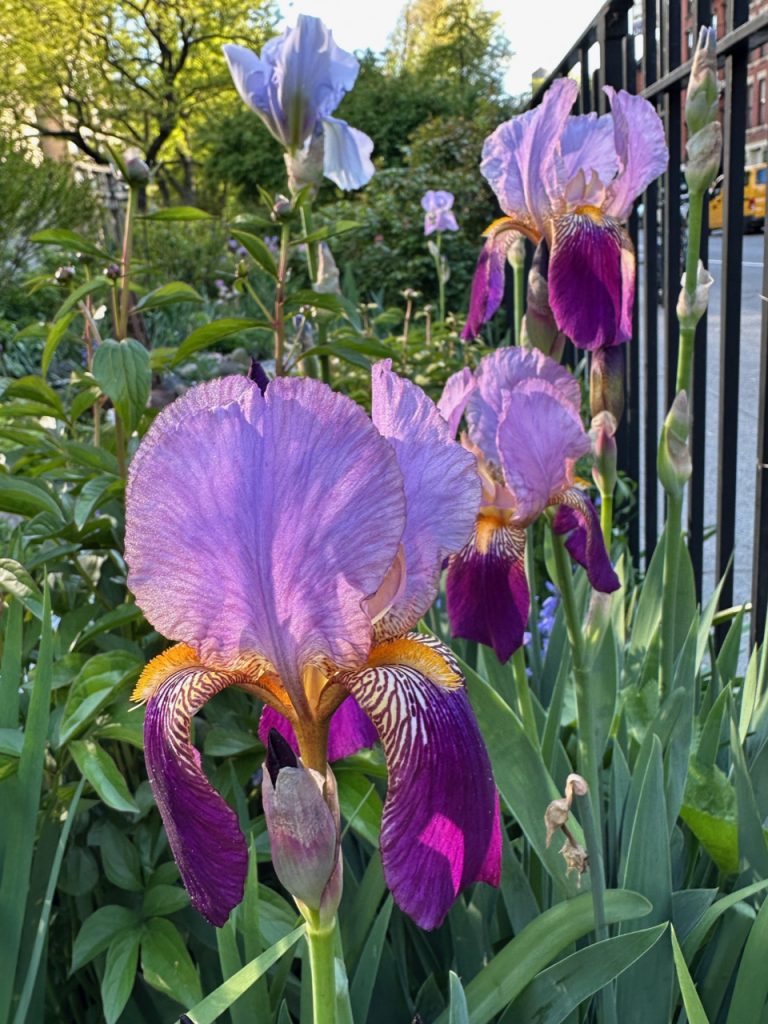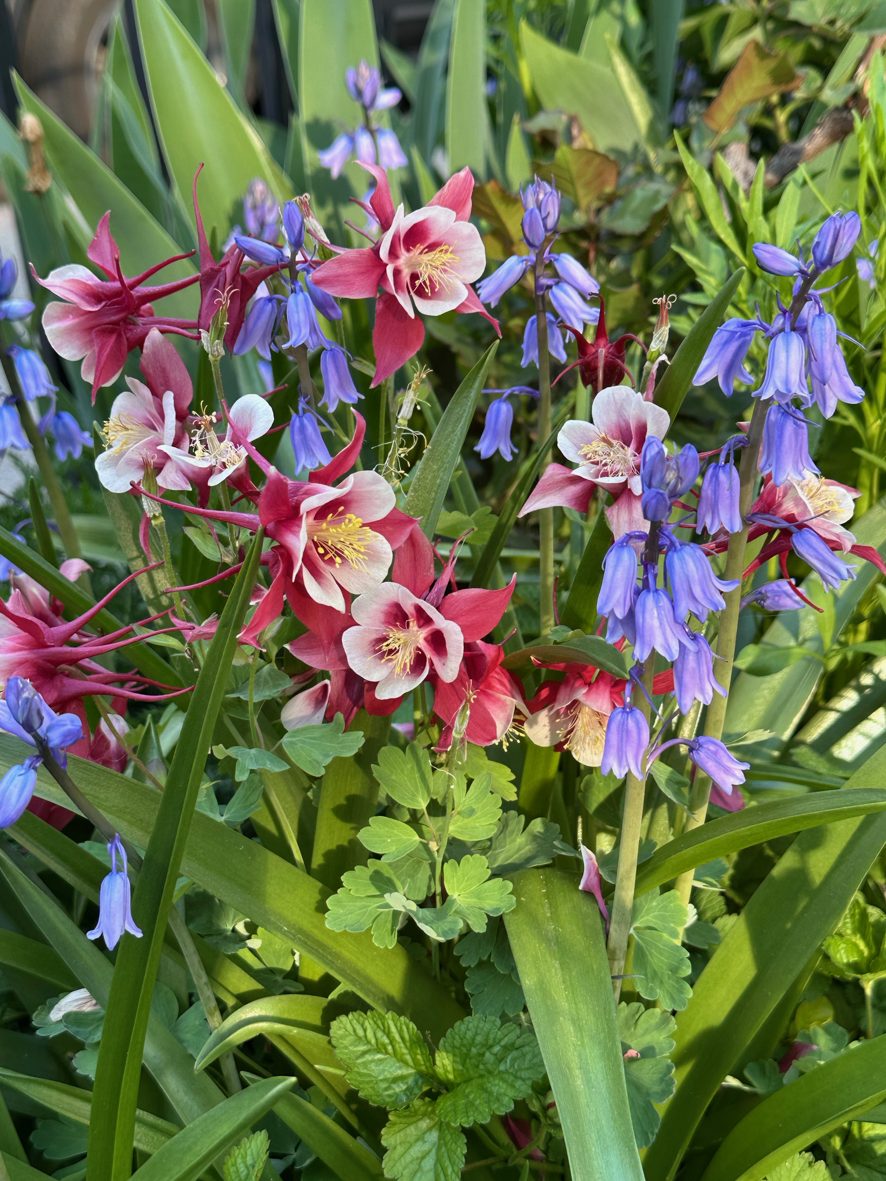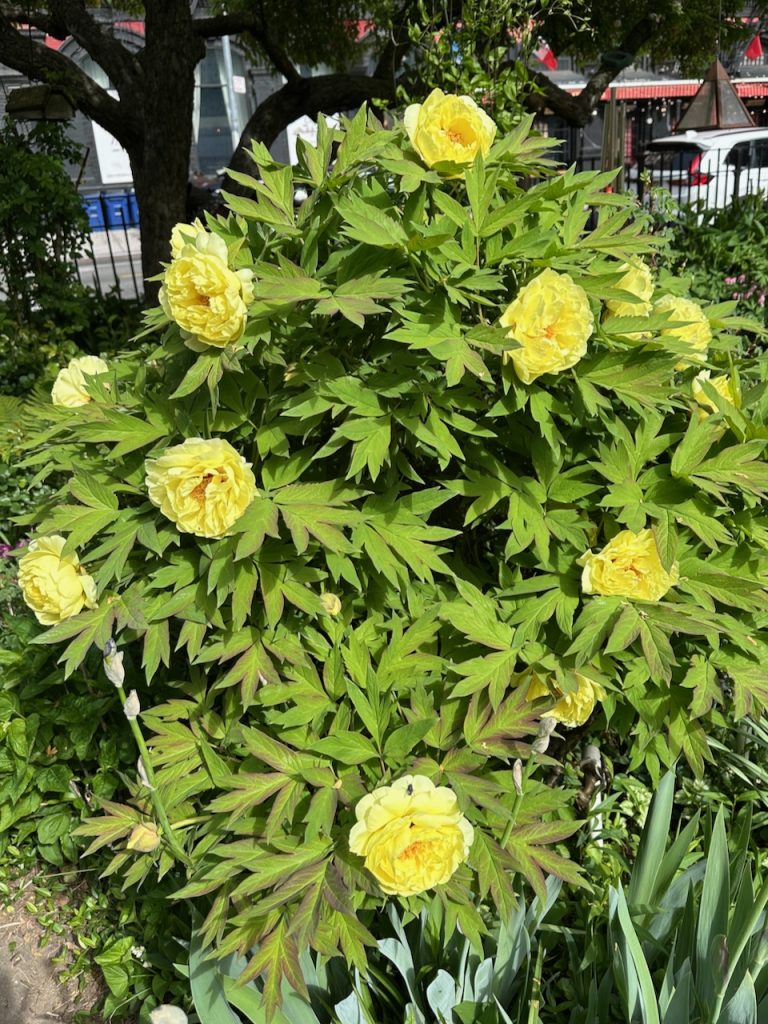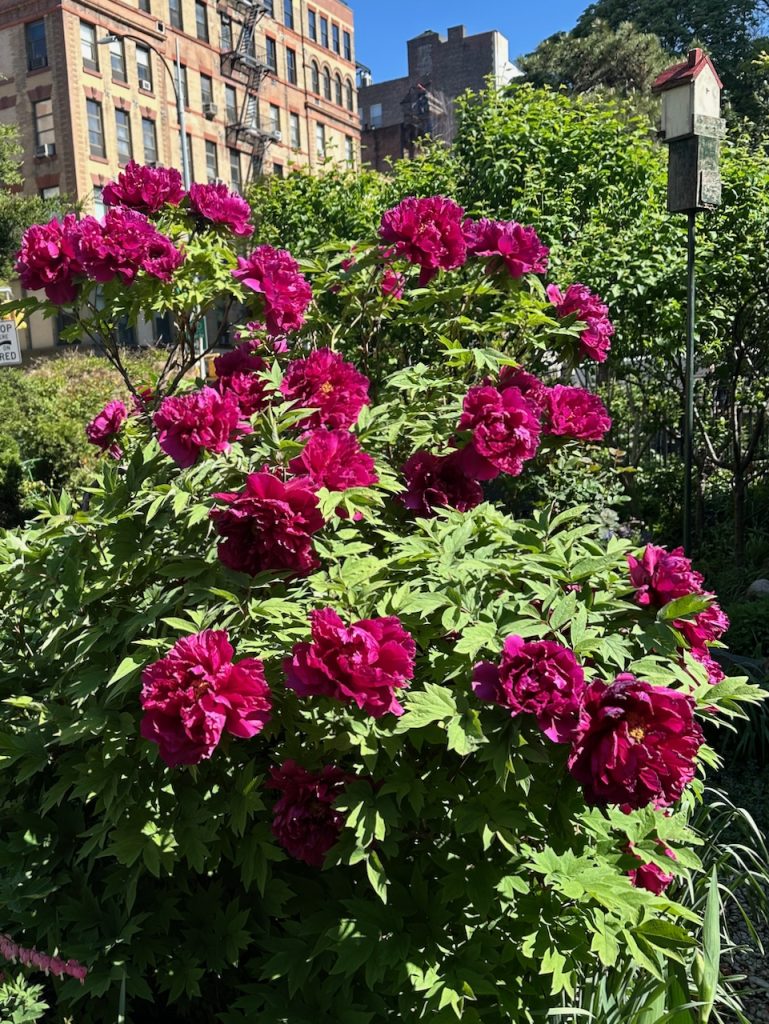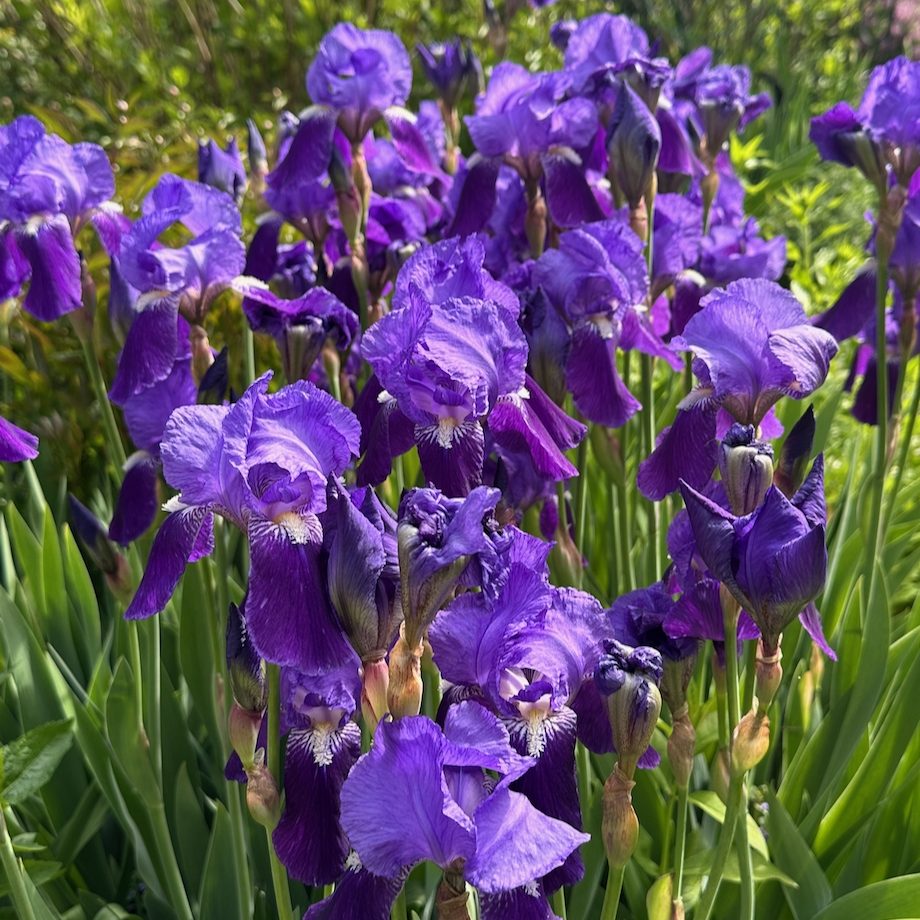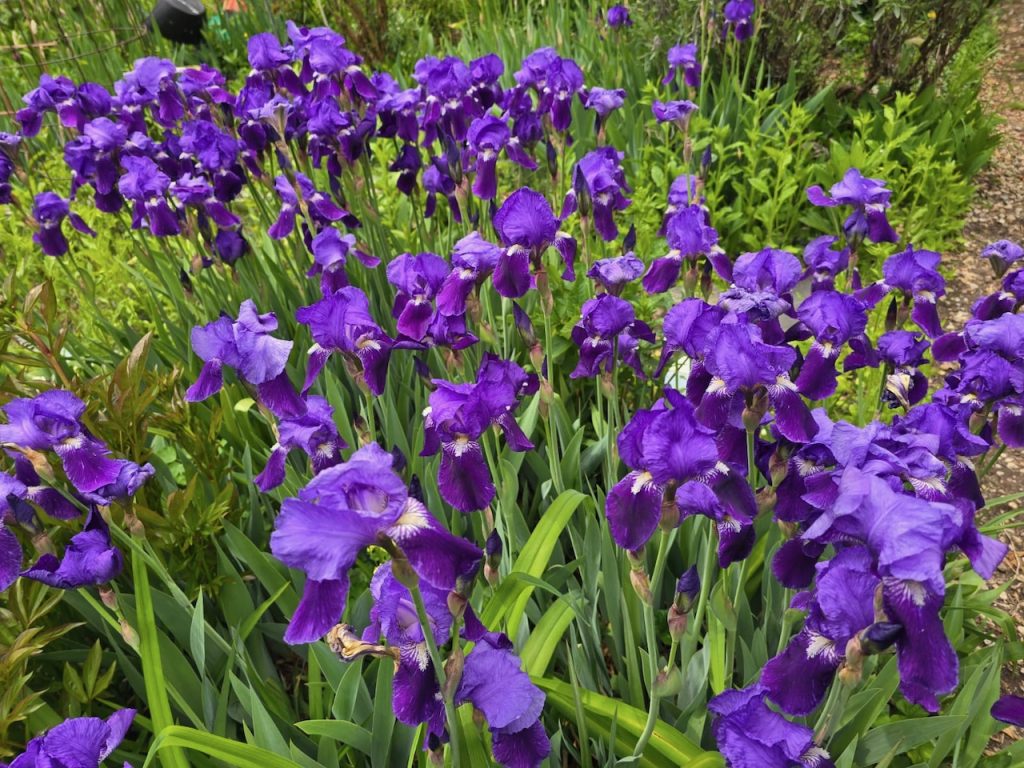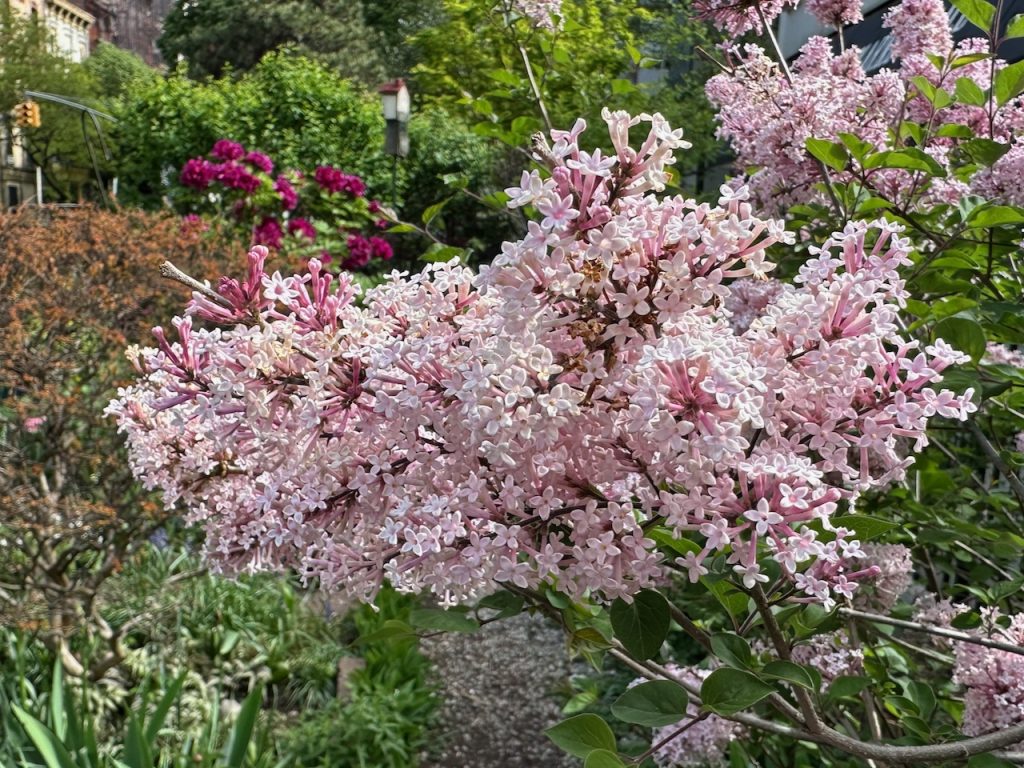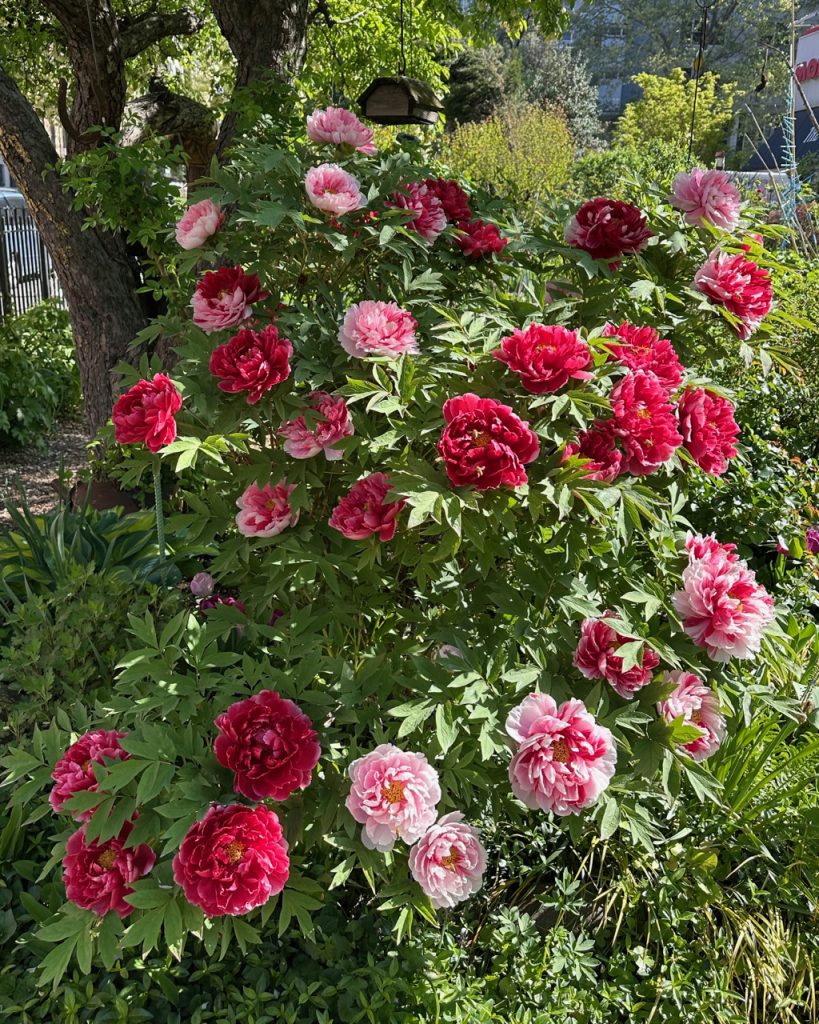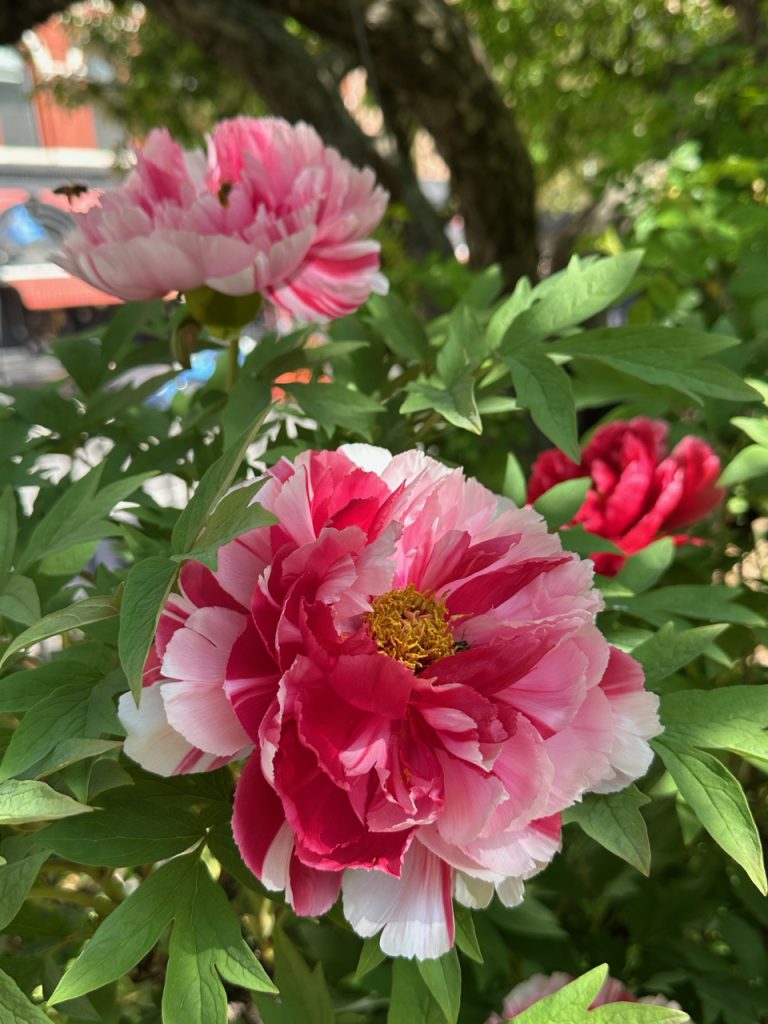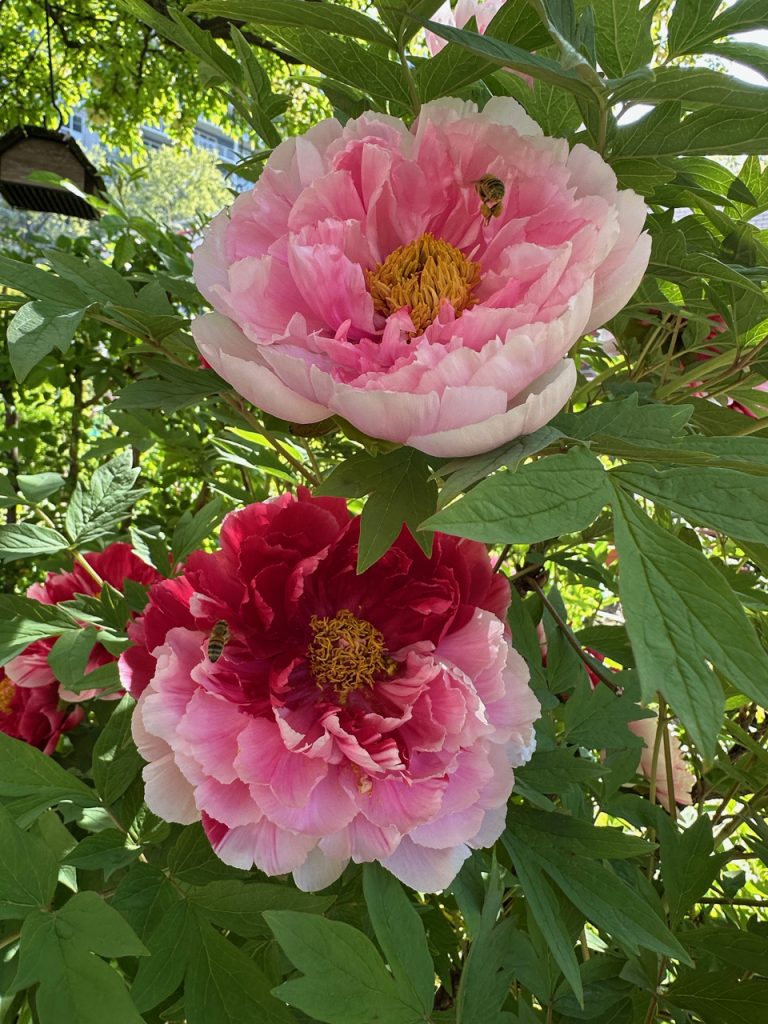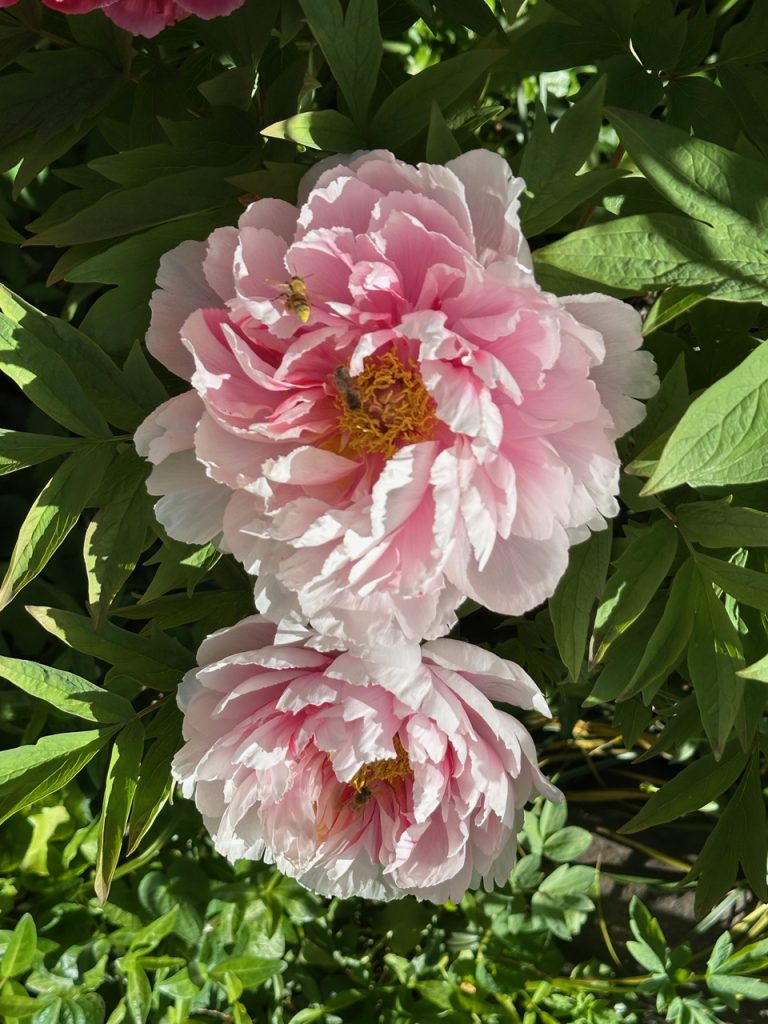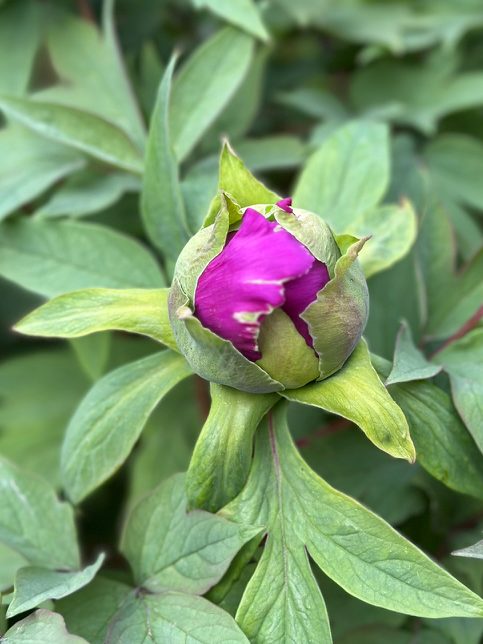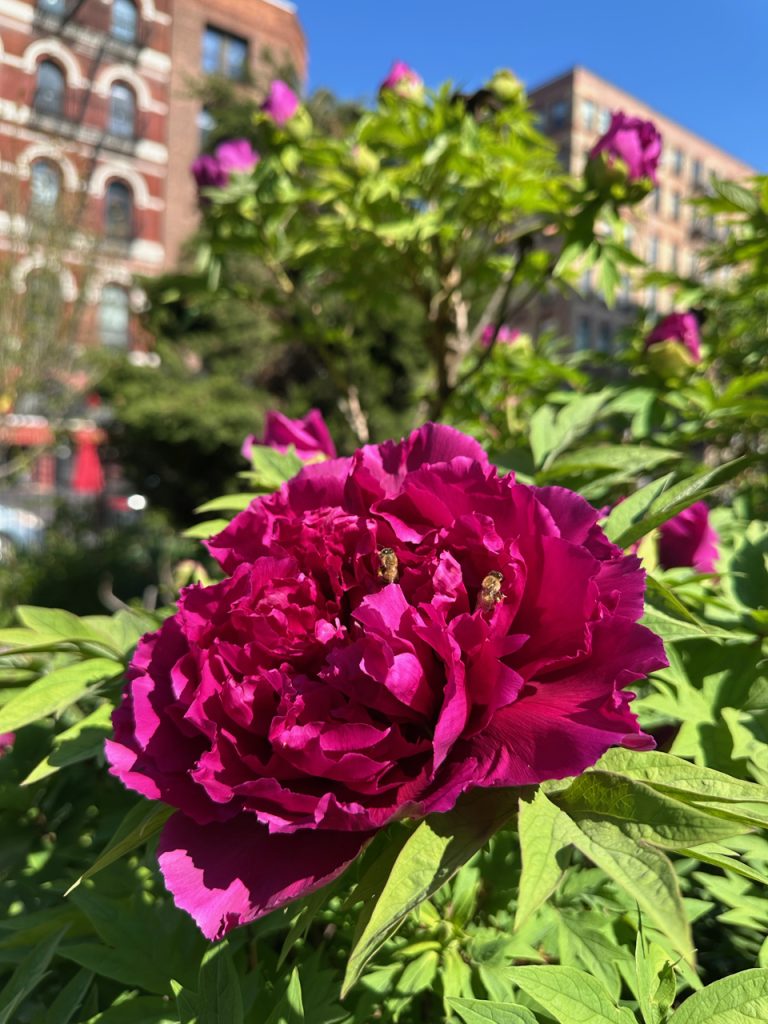
Last week, the pink tree peony was the star of the garden. Today, the showstoppers are our other tree peonies and a field of irises and Korean lilacs in full bloom.
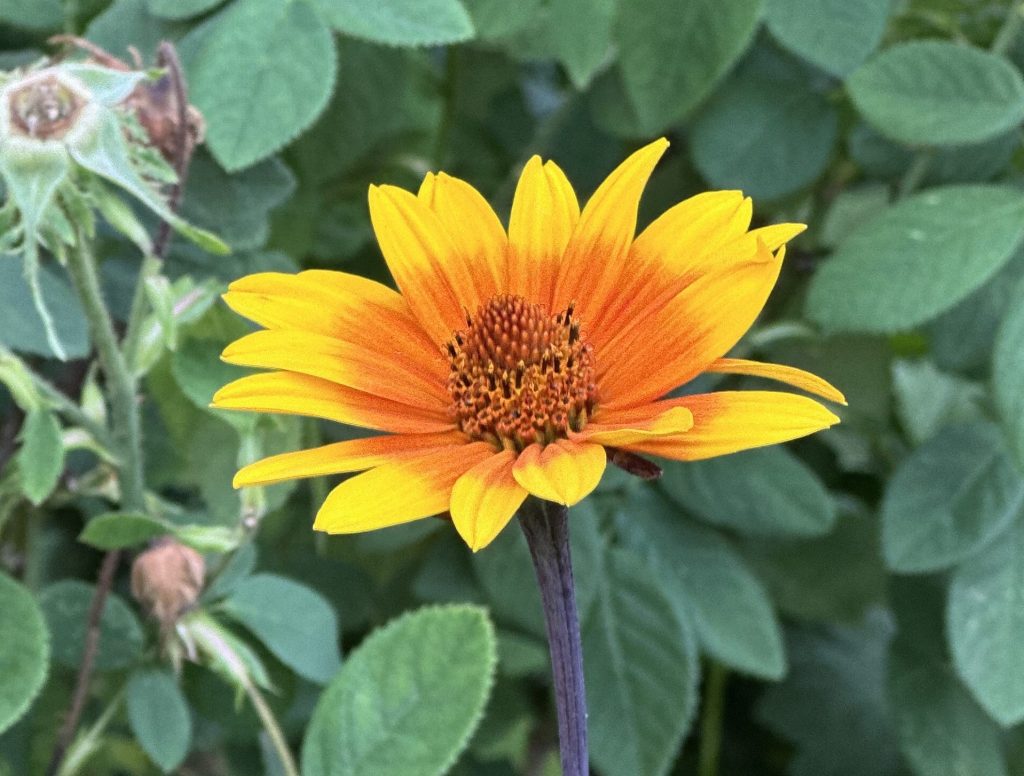
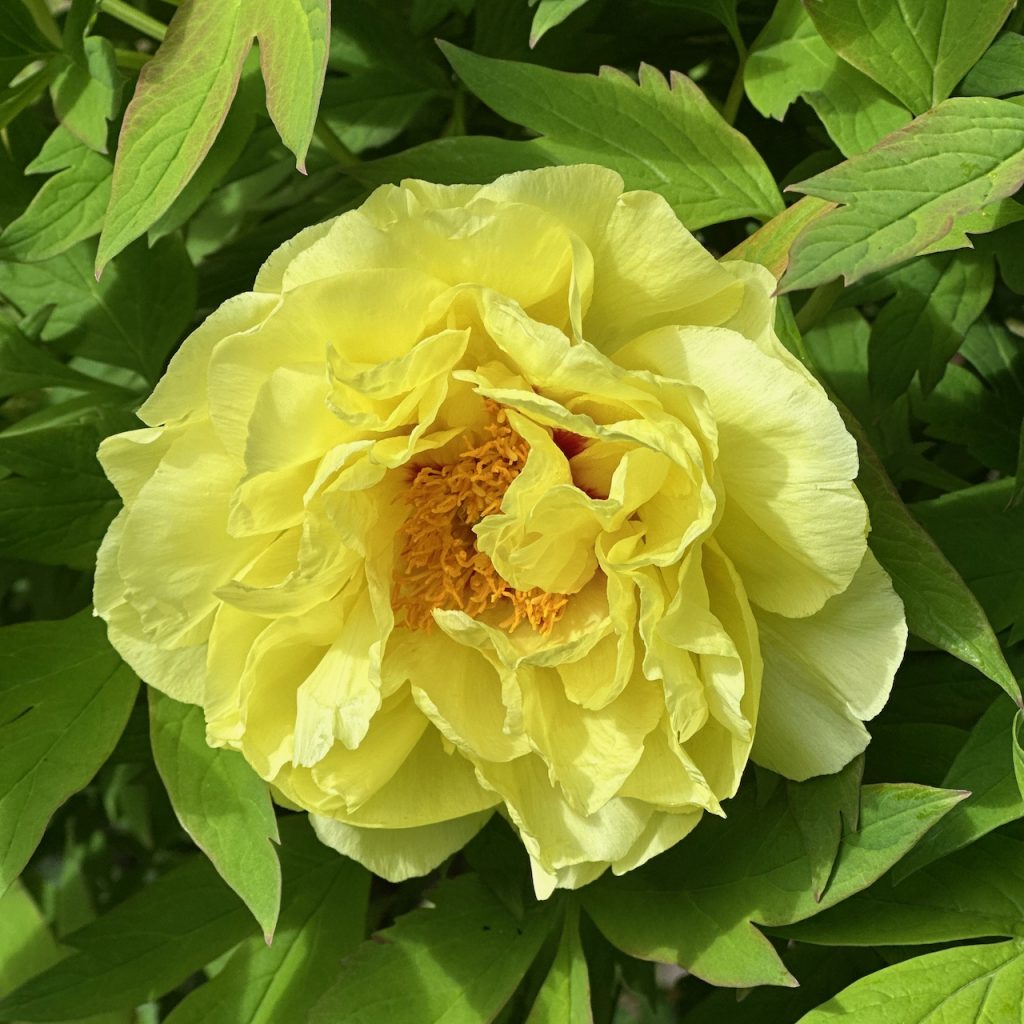
The yellow tree peony is always the last to open its flowers. It is an Itoh peony, a cross between a tree peony and a herbaceous peony. Only these have such bright yellow flowers.
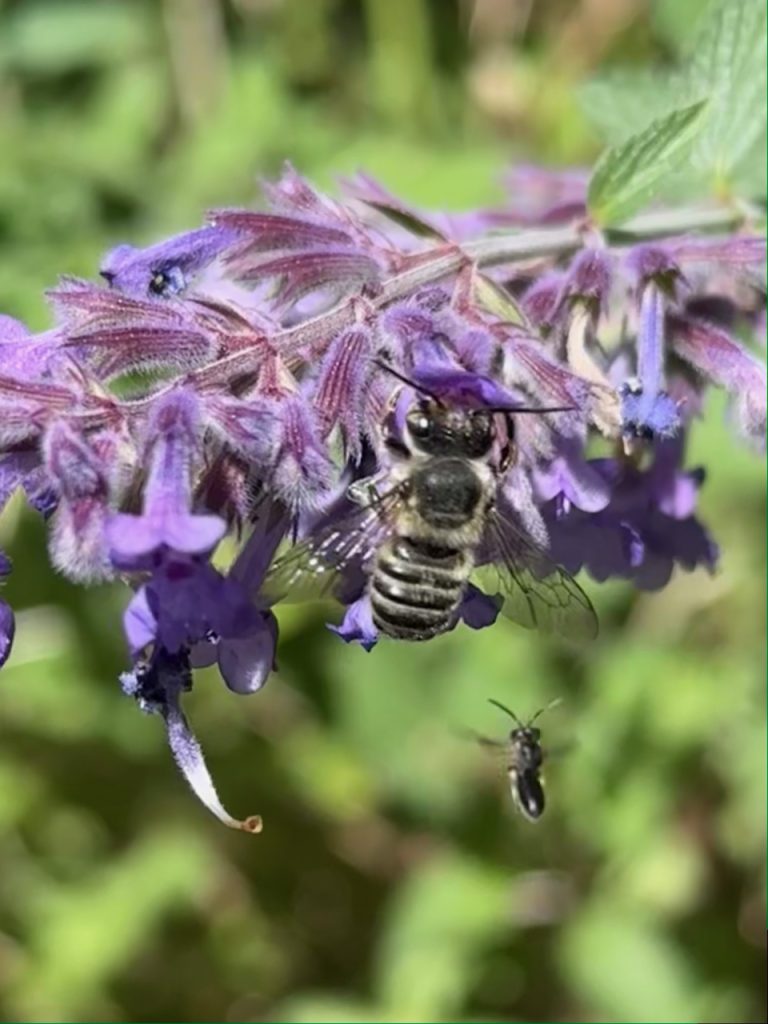
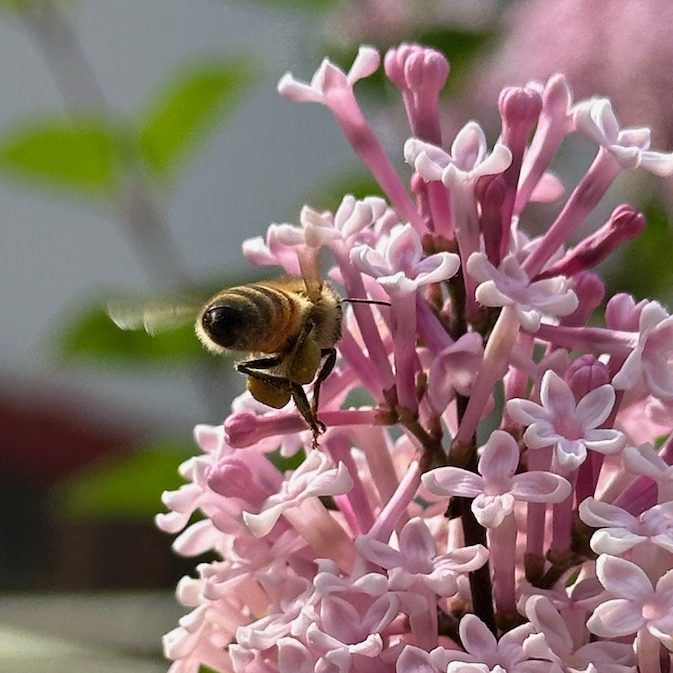
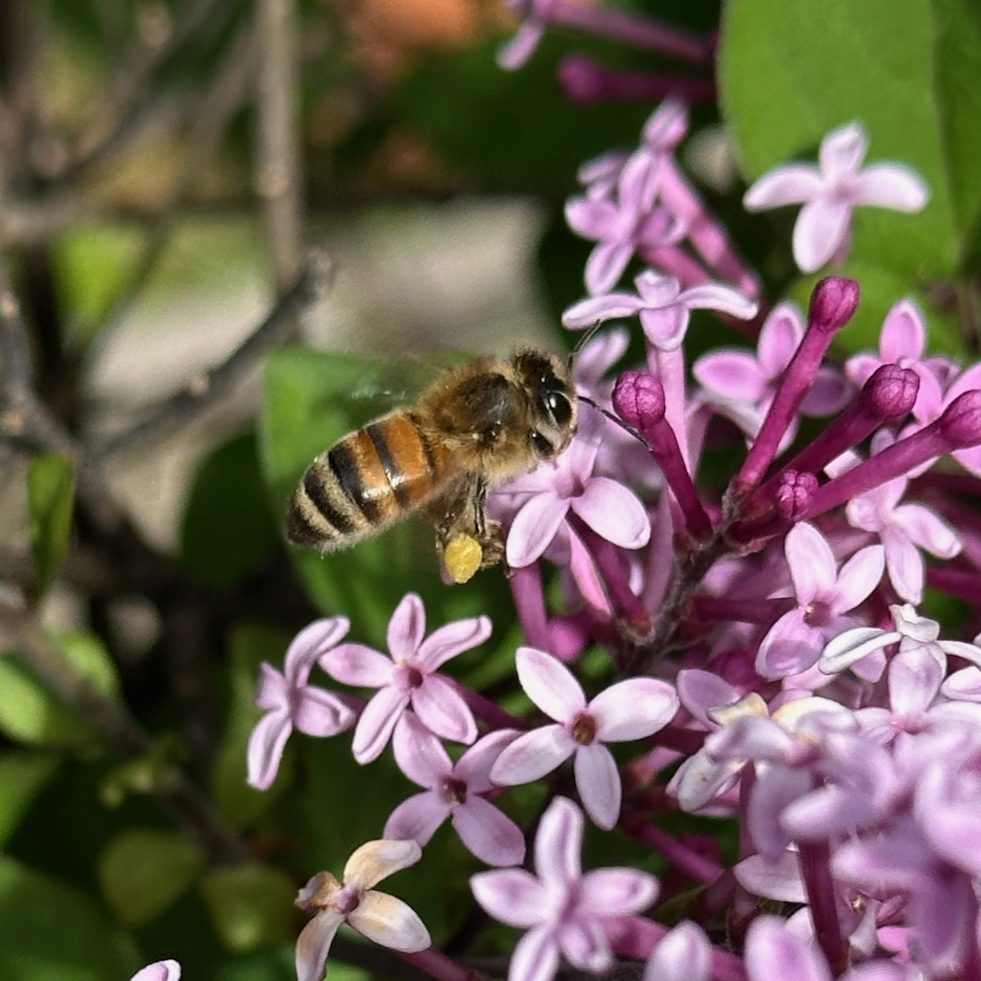
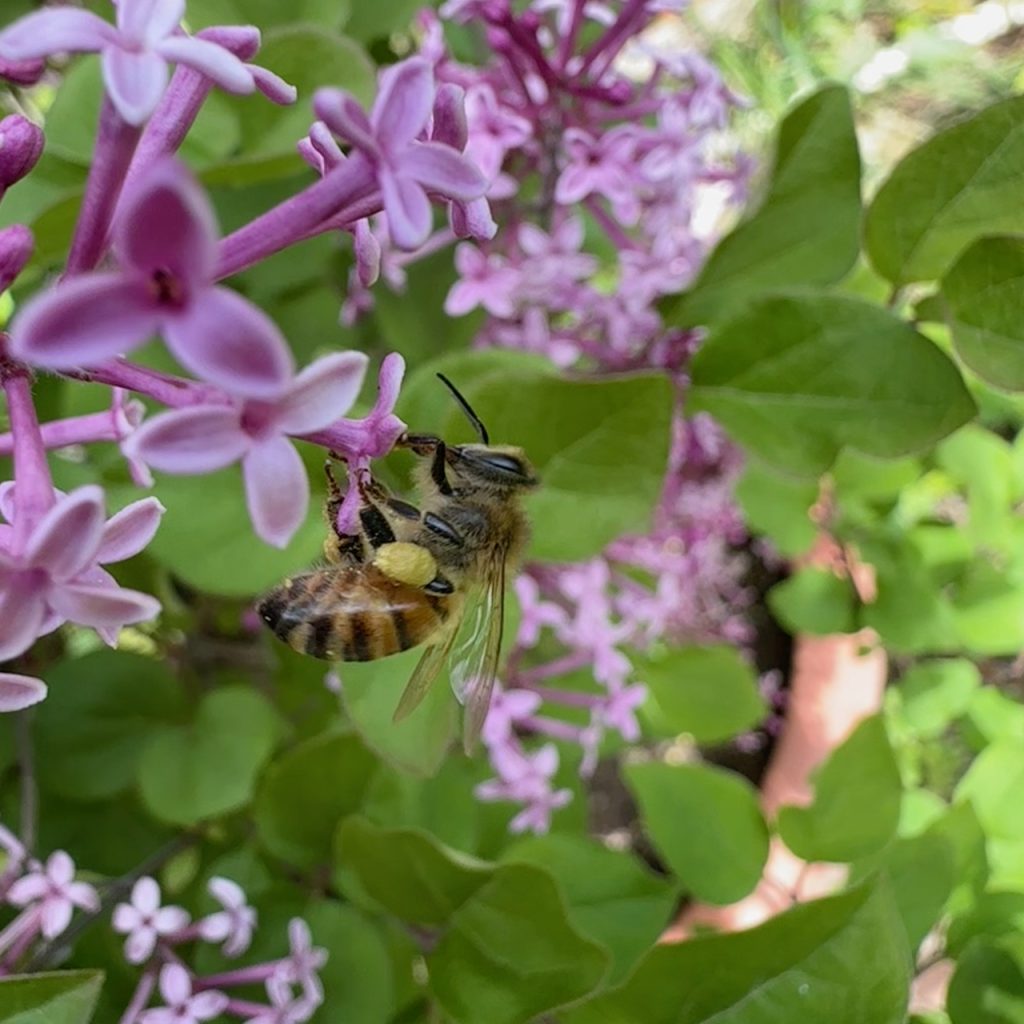
We love the Korean lilacs because they not only look lovely in spring and have a wonderful fragrance, but they also reliably re-bloom later in summer. And these flowers are attractive to pollinators, too (here honeybees).
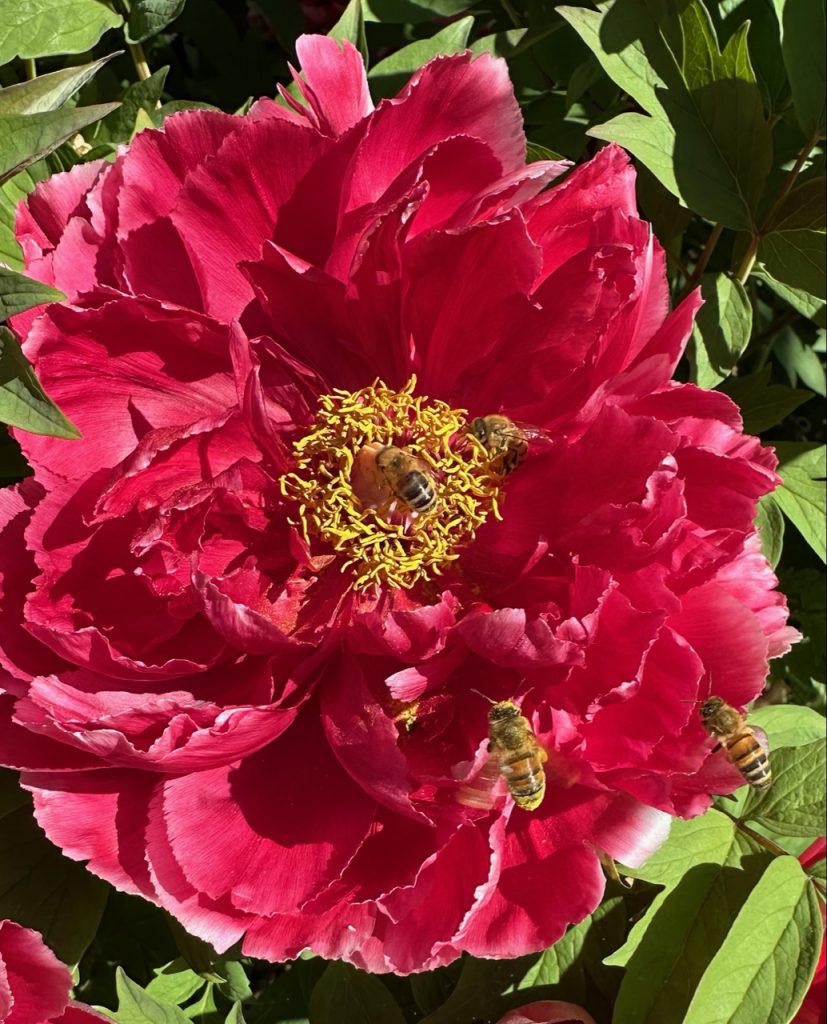
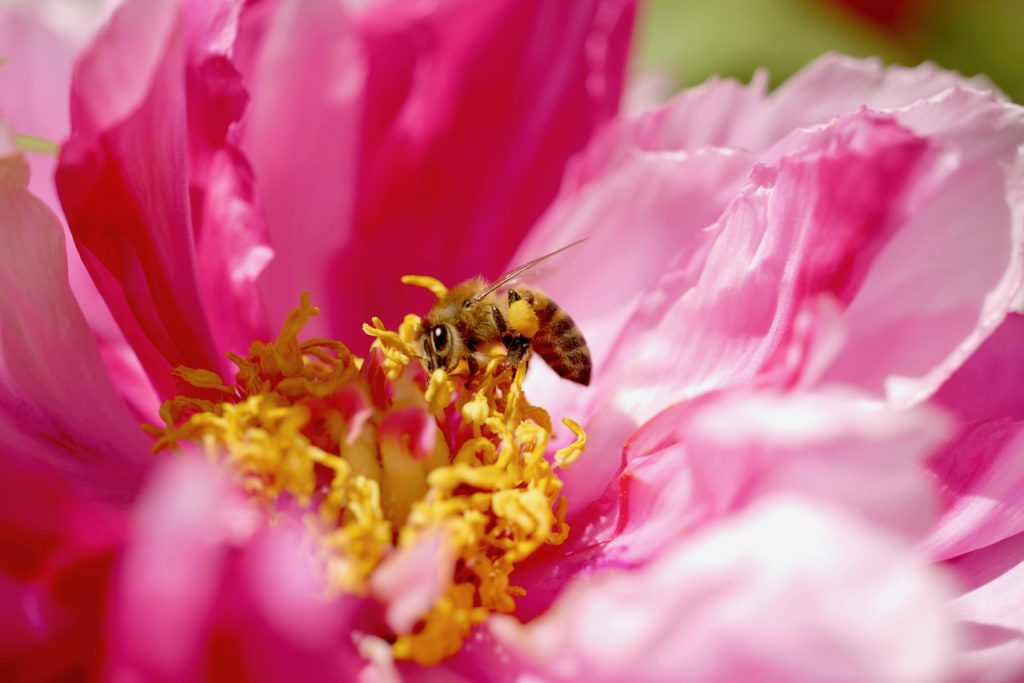
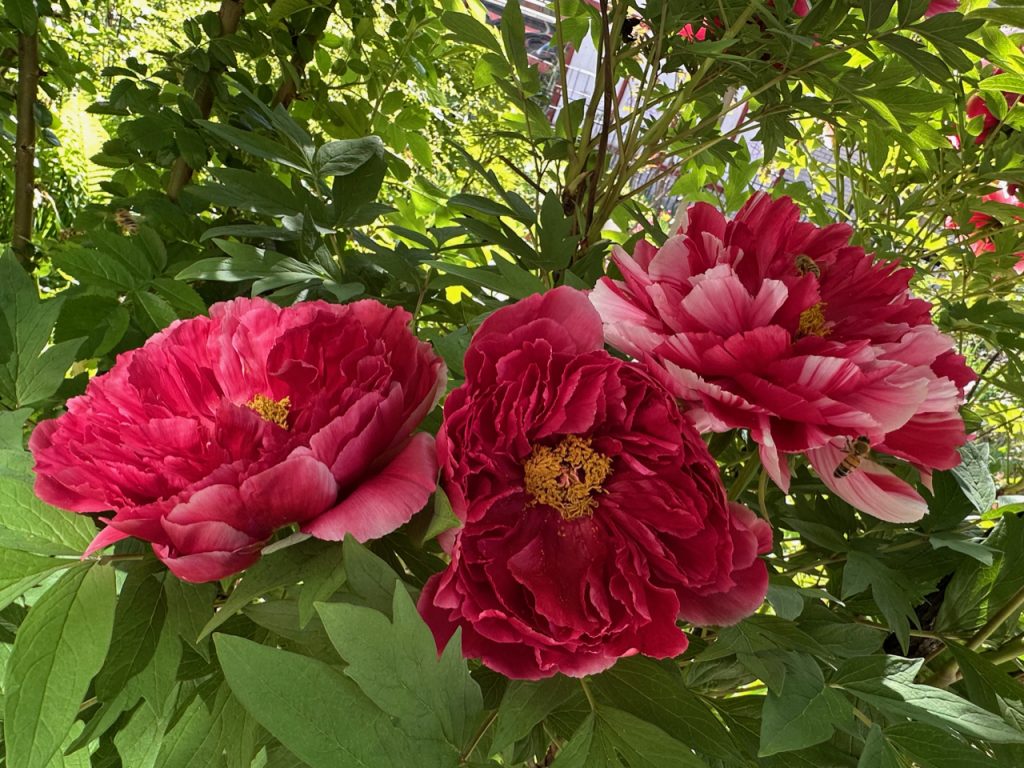
Last week, our variegated tree peony near the gate was in full bloom. Two warm and sunny days made it shine in all of its glory. The flowers attracted attention from us gardeners, passersby and an astonishing number of honey bees. Since we saw the first honeybees in the garden, a lot more must have graduated from hive duty to foraging. And they just love these flowers with lots of yellow pollen.
Every flower of this peony looks a little different. All were equally attractive to bees.Photo by Agnes Chen
Our other tree peony, a magenta colored beauty, is always blooming just a little bit later. It still had lots of buds. Still, here, too, bees were eagerly looking for pollen.
This weekend is no flying weather for bees. We gardeners are actually very happy about the steady rain that is falling this afternoon. It was much too dry for several weeks. However, when we come back to the garden tomorrow, we will likely find most of these pink and purple petals the ground. The beauty of peonies is fleeting and lasts only for a short moment of the gardening year. Good that we can capture it so easily in pictures.
Much has changed since the last entry here. The roses are pruned, shrubs are cut back and the flowerbeds are mostly cleaned up. The first daffodils are already spent and the crab apple tree has buds that will open any day now.
The most colorful flowers at this time of the year are without doubt tulips. They shine in bright red, pink, orange and different shades of yellow. Each fall, some of us plant new tulips. But some of the bulbs from previous years present a fresh flower every spring. This is true for species tulips like the cheerful yellow woodland tulips (Tulipa sylvestris), and for some of the big showy Darwin tulips, for example the red variety below, which looked just as lovely last year.
Woodland tulip (Foto Agnes Chen)
Tulips look a little like a colorful easter egg when seen from the side. They show an entirely different and more interesting “face” when seen from above. In this view, new colors and fancy markings show up. Some tulips paint the inside of their flower pitch black, perhaps to let the yellow pistil, the female part of the flower, stand out so that pollinators can clearly see it. It is meant for bees and flies, but we humans enjoy this display, too.
Here are a few more tulips (updated on April 19), these are the later varieties.
Last weekend, it finally warmed up and the rest of the old snow disappeared. The beautiful weather drew gardeners out, who tidied up their plots, cut back stalks and branches that were bent or broken by the snow, and pruned shrubs and rose bushes.
The warmer temperatures also coaxed spring flowers out of the ground. The first are–as always–snow drops, winter aconites and crocuses. This year, we saw more snow drops than ever. Some new patches popped up in many places. We may have to thank the digging activities of squirrels for this (or even of rats?).
We were happy to see that some of the local honey bees survived the toughest part of the winter and came out to get some fresh nectar and pollen from our snow drops. Nearby, witch hazel had blooms for them, too.
Rumor has it that our rabbit is also still around. If true, this is a real miracle. Many of us had looked for signs of the bunny all winter long. We checked for rabbit footprints in the snow, but found only traces of squirrels, rats and birds. Given that cotton tails don’t hibernate, where was this bunny hiding? What did he eat? We may never know, but we can marvel at the awesomeness of urban wildlife.
Last weekend, a surprise blizzard descended on the East Coast of the country. It started with rain on Sunday afternoon. Later, rain changed to soft wet snow that settled on everything: tree branches and twigs, fences and wires. By late evening, it had turned New York City into a veritable winter wonderland.
On Monday morning, so much snow had fallen, that we could hardly see the shovels that were strategically placed near the gate. And it kept coming down hard.
Three gardeners arrived for the first shift of shoveling on this day (several others had already cleared away the evening snow). This time, the snow was heavy and in places knee deep. But at least, it wasn’t so bitterly cold.
Because the windy part of the blizzard did not arrive until much later in the day, the snow kept accumulating on everything, notably on branches large and small. For some trees, the weight became too much. All over the city, tree branches broke off and entire trees fell over. One of them was a large juniper in the Time Landscape just south of our garden. It was cut down later during the week.
Aside from that drawback, this snow was simply beautiful.
It also was perfect for making snowmen. One of the biggest in the area was built in front of a restaurant a block away from the garden. And Washington Square Park was populated with an entire village of snow people.
Warmer weather followed. By now, all of this is almost history. We kind of hope that it stays this way. Spring may arrive now, we are ready.